Hacking in Movies vs Real Life: 7 Myths Hollywood Gets Wrong
Two agents, one keyboard, a hack stopped by unplugging a monitor. Here are 7 movie hacking myths, what is real, and how hackers actually break in today.
Technology•Published•
In a 2004 episode of NCIS, a hacker breaks into the agency's network. Two agents fight back by typing on one keyboard at the same time, until their boss unplugs the monitor and the attack stops. Security people still share this clip as a joke. Hacking in movies vs real life is one of the widest gaps in pop culture, and knowing that gap matters, because the real attacks look nothing like the ones you are trained to fear.
Why Movie Hacking Looks Nothing Like the Real Thing
Movie hacking is a visual shortcut: a way to show a slow, invisible activity in two exciting minutes of screen time. Real hacking is mostly reading, guessing, waiting and failing. A film cannot show someone reading documentation for three days, so it shows green code and a hero typing at 200 words a minute. Some myths below are pure fiction; others hide a real idea under heavy exaggeration.
The hero types for a minute, and a big green "ACCESS GRANTED" box appears. In reality, an attack starts with reconnaissance: finding out which systems a company runs, which software versions are old and which employees might click a link. Then comes trial and error, often for weeks, and no real system shows a celebratory popup.
What really surprises people is the opposite of speed. Once inside, attackers try to stay quiet. Mandiant's M-Trends 2026 report found that intruders stayed hidden for a median of 14 days in 2025, and for about 122 days in espionage cases. Real hacking is slow and silent, not fast and loud.
Myth 2: Two People on One Keyboard Can Stop an Attack
The NCIS scene fails on every level. Two people typing on one keyboard only produce mixed-up letters, and unplugging a monitor switches off the screen, not the computer or the network. A real response team isolates the infected machine, blocks the attacker at the firewall, resets stolen passwords and then studies logs for hours.
Myth 3: "Enhance!" Can Sharpen Any Blurry Photo
A detective zooms into a blurry CCTV frame, says "enhance", and a crisp number plate appears. But a photo only contains the detail its pixels captured; no software can recover what was never stored.
AI makes this myth more dangerous, not less. AI upscalers do not recover detail; they invent a plausible face that fits the pixels. In 2020, a tool called PULSE turned a pixelated photo of Barack Obama into the face of a white man. It looked sharp, but it was a guess, not evidence.
Myth 4: Hackers Fly Through Glowing 3D Worlds
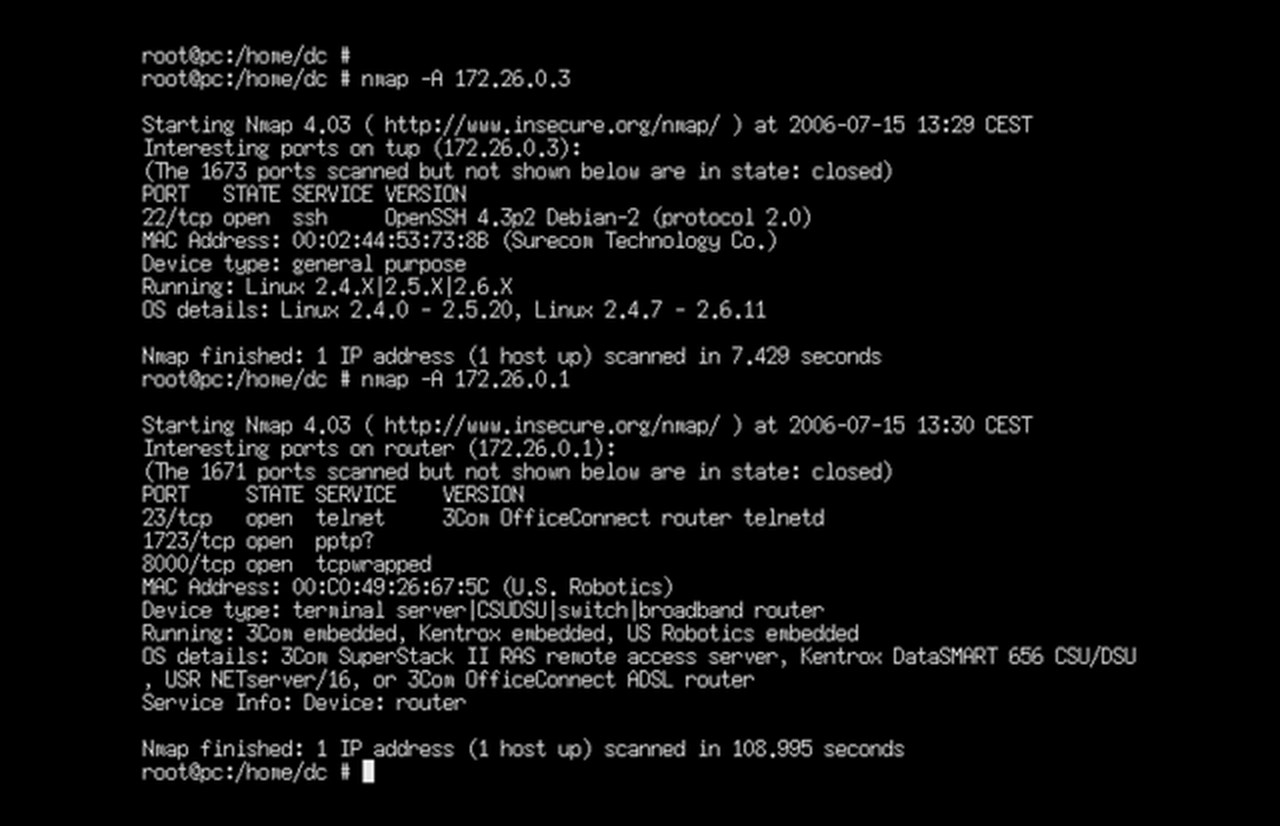
In Jurassic Park, a girl sees a 3D maze of blocks and says, "It's a UNIX system! I know this!" Here is the twist: that program was real. It was FSN, an experimental 3D file viewer made by Silicon Graphics. But it was only a demo; real attackers work in a plain text window, typing commands and reading replies.
This is Nmap, a free scanner used by attackers and defenders alike. It lists which "doors" (ports) are open on each machine, which is only the first step of a long process.
Myths That Are Half True
Myth 5: Tracing a Call in 30 Seconds
"Keep him talking, we need 30 more seconds!" This was partly true with old mechanical telephone exchanges. Today the telecom company knows a phone's tower almost instantly, but police need legal permission to get it, and a criminal using a VPN or forwarded calls can take weeks to trace.
Myth 6: Any Phone Can Be Hacked With One Click
This one is real, but rare. In 2021, researchers at Citizen Lab found FORCEDENTRY, an iPhone attack used by the Pegasus spyware that needed no click at all; a hidden message was enough. But tools like this cost a fortune. In a US court case, an executive of NSO Group, the company behind Pegasus, testified that a yearly licence could cost up to $6.8 million. Governments use them against chosen targets, not random people.
Myth 7: A Virus Can Physically Destroy Machines
A laptop exploding from a virus is pure fiction. But software can damage machines that are controlled by computers. Stuxnet, a worm widely believed to have been built by the US and Israel, made centrifuges at Iran's Natanz nuclear plant spin at damaging speeds while showing normal readings to engineers. About 1,000 centrifuges were reportedly destroyed. Researchers estimate it took a team of about ten people two to three years to build. That is the opposite of one hero typing for a minute.
How Hacking Really Happens Today
So how do attackers actually get in? Mostly through people. Verizon's 2026 Data Breach Investigations Report, which studied over 22,000 confirmed breaches, found a human element in 62% of them: a clicked link, a shared password, a fooled employee. Most real attacks look like this:
Phishing emails and SMS that copy a bank, courier or government office
Phone calls asking for an OTP, often by someone claiming to be from your bank
Reused or weak passwords taken from older data leaks
Software that was never updated, leaving a known hole open
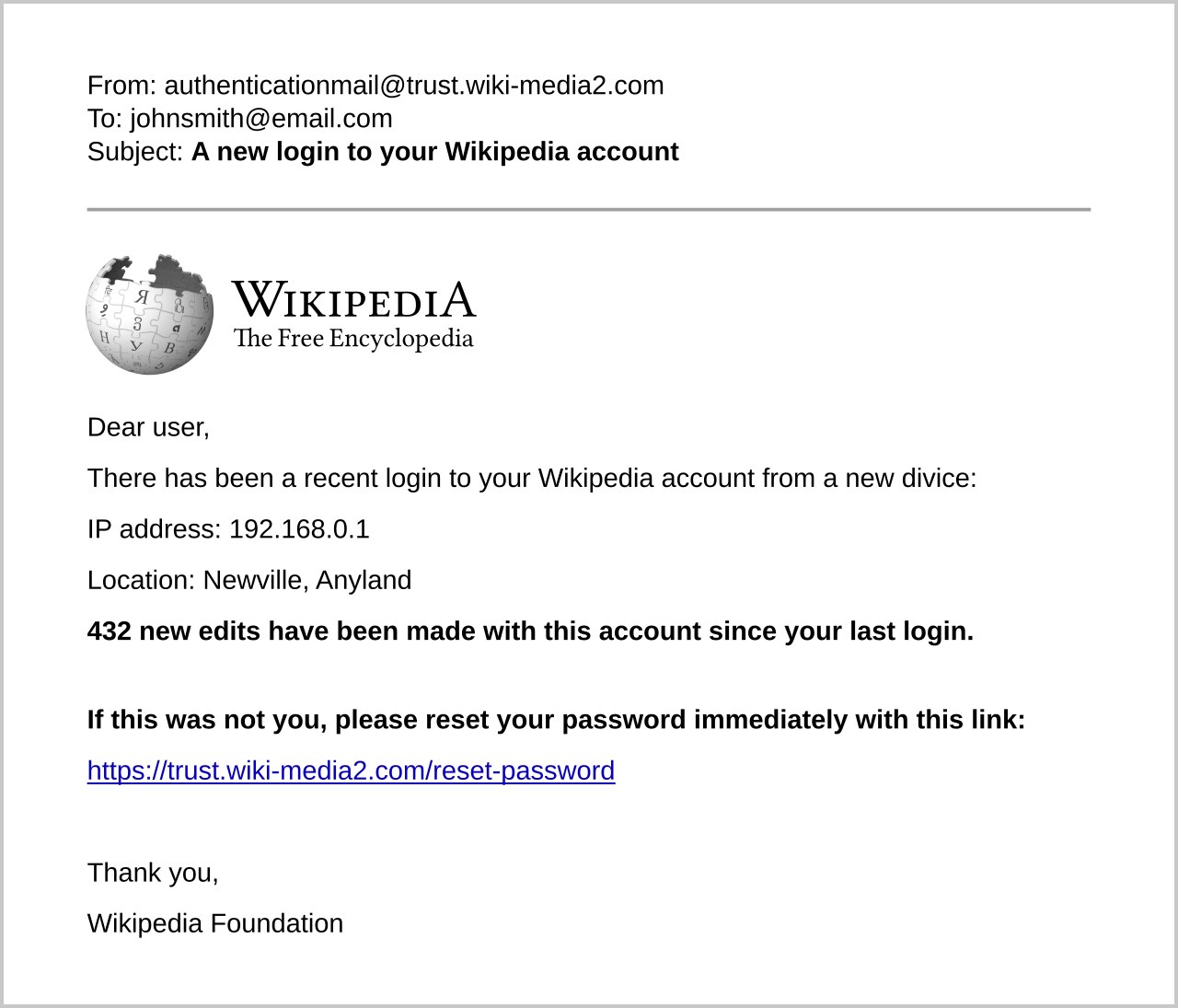
Look closely at the image. The sender's domain is not the real one, the message creates panic about a new login, and the link leads to a copycat site that steals your password. No coding skill is needed to send it.
India shows the scale clearly. Indians filed over 24 lakh cybercrime complaints on the national portal in 2025, and reported losses of about ₹22,495 crore, according to I4C figures reported in the press (other reports put it near ₹19,800 crore). Most of that was lost to fake investment schemes and "digital arrest" calls. Not one of these needed a hacker in a hoodie.
Here is the movie version against reality:
Movie scene
What really happens
Hack done in 60 seconds
Weeks of research, then a quiet stay of days or months
3D animated interface
Plain text commands in a terminal
Genius hacks a computer
Scammer tricks a person into clicking or sharing an OTP
Stopping an attack by typing fast
Isolating machines, blocking access, reading logs
My take: the worst thing these myths create is false comfort. If you believe hacking takes a genius in a dark room, you will never suspect a polite caller asking for an OTP.
Frequently Asked Questions
Which movie or show shows hacking most realistically?
Mr. Robot is widely praised by security professionals, because the commands and tools on screen are mostly real and the attacks lean heavily on social engineering.
Can hackers turn on my laptop or phone camera?
Yes, but only after malware is installed on your device, usually through a malicious link, app or file. Keeping your system updated and not installing apps from unknown sources blocks most of these attempts.
Is ethical hacking legal in India?
Testing a system is legal only with written permission from its owner, or on practice platforms and bug bounty programmes that invite it. Accessing someone else's system without permission is an offence under the IT Act.
What should I do if I lose money to a cyber fraud in India?
Call the national helpline 1930 or file a complaint at cybercrime.gov.in as soon as possible. Reporting within the first few hours gives the best chance of freezing the money before it moves.
Final Thoughts
Movies will keep showing hackers in hoodies, and that is fine. But real hacking is slow, quiet and mostly aimed at people, not machines. The next time a film hero breaks into a bank in a minute, remember that the real threat is a message saying your KYC has expired. If someone in your family forwards such messages without thinking twice, share this article with them, and explore more plain-English guides in our Technology section.