The new RBI money transfer rules replace two older circulars from October 2011 and July 2024, so everything now sits in one place. The limits are not a big jump from before, but the clear rules on identity checks, alerts and complaints help ordinary senders.
Cash Deposit at a Bank Branch via NEFT
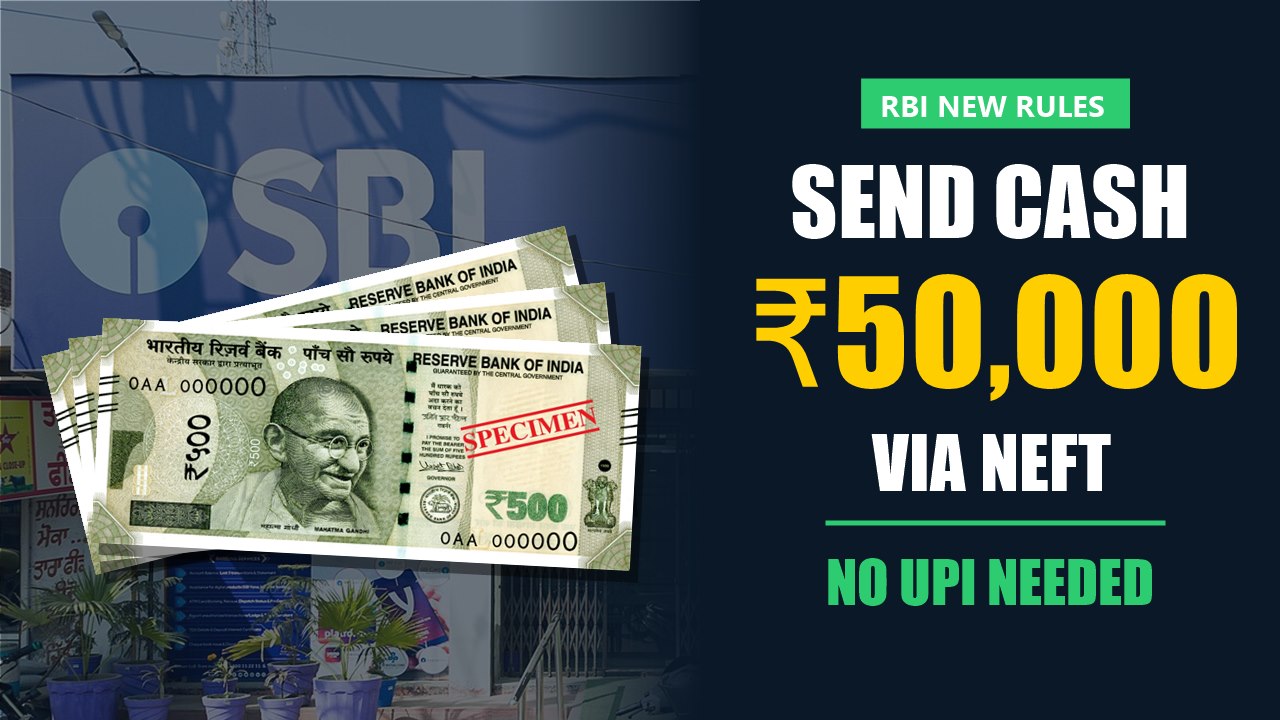
A walk-in customer, meaning someone who does not need an account at that particular bank, can go to a branch with cash and send up to ₹50,000 to any bank account in India through NEFT. NEFT, or National Electronic Funds Transfer, is the bank-to-bank system that moves money to the receiver's account.
Cash Through a Bank Agent or ATM
Many villages and small towns have a business correspondent (BC), often called a bank mitra, who works for a bank from a small shop. You can also deposit cash for transfer at some ATMs. Here the limit is smaller, ₹5,000 per transaction and ₹25,000 per month per sender.
Cash Pay-Out for Families Without a Bank Account
Sometimes the person at home has no bank account at all. In that case, the sender can transfer money from their own bank account, and the receiver can collect it as cash at an ATM or from a bank agent. This cash pay-out is capped at ₹10,000 per transaction and ₹25,000 per month for each receiver, and the bank must record the receiver's name and address.
Every sender must be registered with a verified mobile number and a self-certified officially valid document, such as an Aadhaar card, voter ID, passport or driving licence. Self-certified simply means you sign the photocopy to confirm it is yours. On top of this, every transaction must pass an extra security check called an Additional Factor of Authentication, which in practice is often an OTP sent to your phone.
So keep your phone with you at the branch or bank agent, and never share the OTP with anyone who calls or messages you.
Under the RBI money transfer rules, you don't need an account at the bank you visit. Here is how it usually works.
Carry the cash, your ID document and the mobile phone linked to your registration.
Note the receiver's name, bank account number and IFSC code correctly.
Fill in the NEFT cash remittance form at the counter, or ask the staff to help.
Verify the transaction with the OTP or other check the bank asks for.
Keep the receipt with the transaction reference number until the money reaches home.
My take: always double-check the account number and IFSC before handing over the form. Getting money back from a wrong account is slow, and this is one of the most common mistakes first-time senders make.
RBI has not fixed a single fee. Banks and their agents may charge a "reasonable" amount. Ask for the charge before you pay, and check that it is printed on your receipt.
Banks must also send alerts when money is credited through this facility, and they must watch for unusual spikes in deposits, which helps stop fraud and misuse of accounts. If something goes wrong and the bank does not fix it, your complaint now falls under the Reserve Bank – Integrated Ombudsman Scheme, 2026, where you can escalate it.
Millions of migrant workers and daily wage earners still depend on cash to support family in another state, and many have used informal agents who charge high fees and offer no protection. The RBI money transfer rules give them a safer route with fixed limits, a receipt and a complaint system. Honestly, for someone sending ₹5,000 or ₹10,000 home every month, that protection matters more than the limit itself.
How much cash can I transfer through NEFT at a bank branch?
A walk-in customer can send up to ₹50,000 in cash to any bank account in India through NEFT at a bank branch.
Can my family receive money without a bank account?
Yes. They can collect up to ₹10,000 per transaction in cash at an ATM or a bank agent, with a limit of ₹25,000 per month for each receiver.
What documents do I need for a cash money transfer?
You need a verified mobile number and a self-certified ID such as Aadhaar, voter ID, passport or driving licence. Each transaction is also confirmed with an extra check, often an OTP.
The RBI money transfer rules won't make headlines like a new UPI feature, but for people who still live in cash, they are a real step towards safer and cheaper transfers. If someone in your family or at your workplace sends money home in cash, share this guide with them so they know their limits and rights. You can also read more simple money guides in our Finance section.