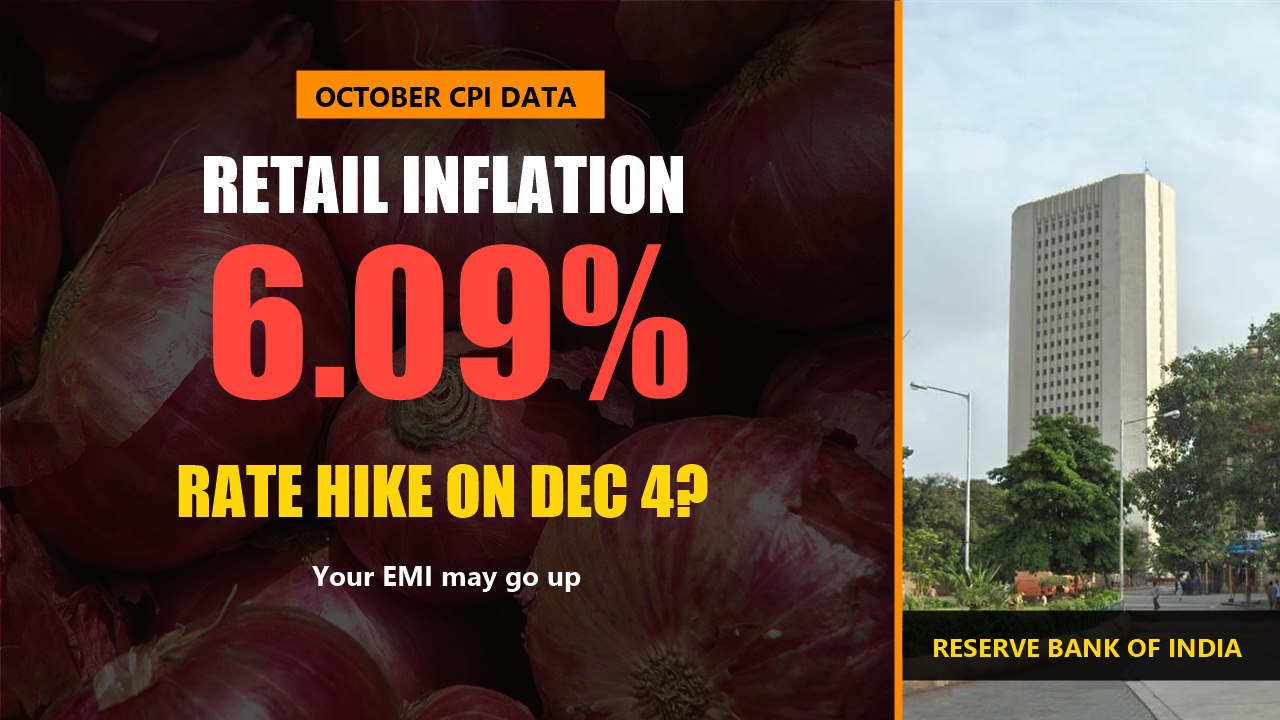
Three forces are behind this rise. The first is weather: a weak monsoon left reservoirs poorly filled, which threatens the rabi crop sown this winter and keeps vegetable prices high. The second is cost pass-through, meaning higher energy and raw material costs are slowly spreading into everyday goods and services. The third is a base effect, because prices were almost flat in October 2025, so even a smaller monthly rise this year shows up as a bigger yearly jump.
One hopeful sign: crude oil has cooled to around $92 a barrel and the rupee has strengthened, which economists say could ease some pressure in the coming months.
The repo rate is the interest rate at which the RBI lends money to banks, and banks pass changes in it on to your loans and deposits. The Monetary Policy Committee meets from 2 to 4 December, and the decision will be announced on 4 December.
Where the Repo Rate Stands Now
In October, the RBI raised the repo rate by 25 basis points (0.25 percentage point) to 5.50%. All six members voted for the hike, and the RBI changed its stance to "calibrated tightening". That means rate cuts are off the table for now.
What Economists Expect
Most economists now expect a second 25 basis point hike, which would take the repo rate to 5.75%. ICRA's chief economist Aditi Nayar says a further hike "appears almost certain". DBS Bank's Radhika Rao says the data reinforces her expectation of a second successive hike. Axis Bank's Tanay Dalal goes further and warns that inflation could stay above 6% until June 2027.
My take: a pause looks unlikely after a 6.09% print, because the RBI itself projected inflation at around 6% for this quarter. A 50 basis point jump also seems too aggressive while crude prices are falling. A 25 basis point hike is the most likely outcome.
A repo rate hike raises the cost of floating-rate loans, because most new home loans in India are linked to an external benchmark such as the repo rate. When the repo rate rises, your bank resets your loan rate at the next reset date.
Home Loan and Personal Loan EMI
Take a ₹30 lakh home loan for 20 years at 8%. The EMI is about ₹25,093. If the rate rises by 0.25% to 8.25%, the EMI becomes about ₹25,562, roughly ₹469 more every month. Over the full term, that adds up to more than ₹1.1 lakh in extra interest. Many banks increase the loan tenure instead of the EMI, so check your loan statement after the next reset.
Good News for Fixed Deposit Investors
Savers get the other side of the deal. When rates rise, banks usually raise fixed deposit rates too, so a hike is good news for FD investors. If you plan to open an FD, waiting until after 4 December may get you a slightly better rate.
If you have spare cash, a part-prepayment on your home loan cuts the impact of any future hike. If your loan is still linked to an older benchmark like MCLR or base rate, ask your bank whether switching to a repo-linked rate makes sense. Before taking a new loan, compare rates now rather than after banks reprice in December.
What is India's retail inflation for October 2026?
India's CPI retail inflation was 6.09% in October 2026, the highest in two years and above the RBI's 6% upper limit.
Will EMI increase after the December RBI policy?
If the RBI raises the repo rate on 4 December, EMIs on repo-linked floating-rate loans will rise at the next reset, or your loan tenure will get longer.
When is the next CPI data release?
November's retail inflation data is due on 14 December 2026.
Inflation numbers can feel abstract until you see them in your onion bill and your EMI. October's data changed the mood from "maybe" to "likely" for a December rate hike. Borrowers should review their loans now, and savers may soon get better deposit rates. Do you think the RBI should hike again or wait for food prices to cool? Share your view in the comments, and follow our News section for the 4 December decision.